True Love: The Gesture That Inhabits the Wall
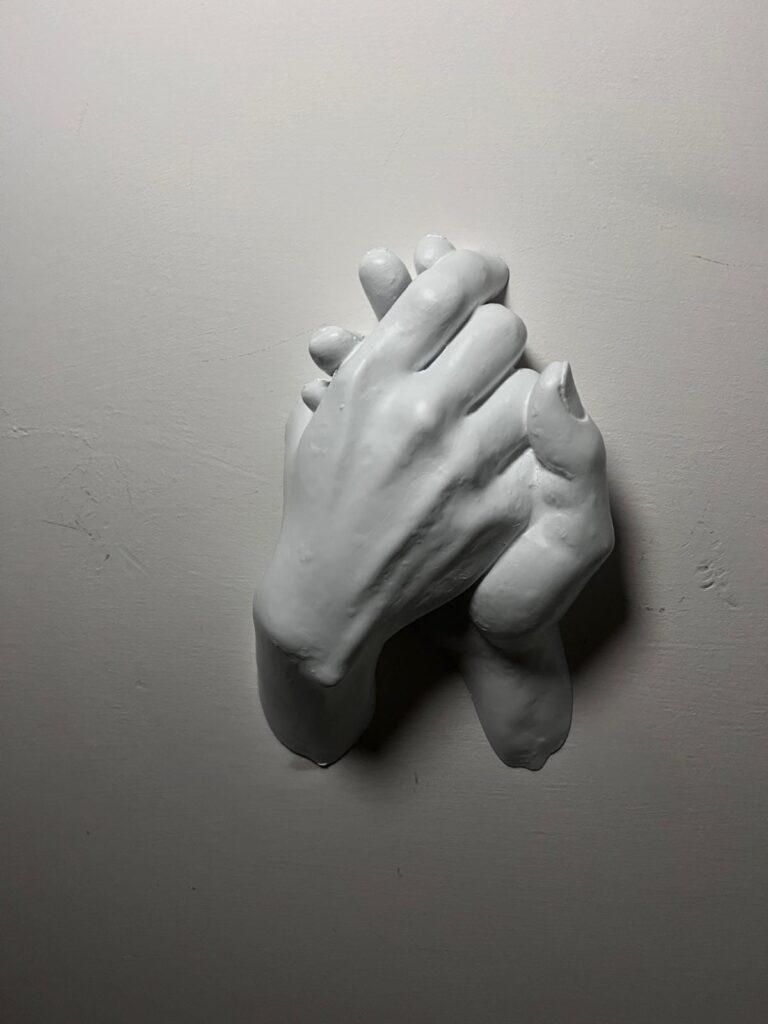
There are gestures that do not seek words. Two hands that seek each other, find each other, clasp: a language that crosses cultures and personal stories. When this gesture becomes sculpture and finds a place on a wall, it transforms the space from a simple container into a silent witness to what truly matters.
An empty wall awaits a sign. There is no need to fill it with random frames or makeshift decorations. What is needed is a focal point that tells of who inhabits that space, that declares without shouting the soul of the home.
The gesture that defines the space
*Three-dimensionality is not only aesthetics: it is the way an object dialogues with light, creates shadows, breathes in the space, and draws the eye.*
Clasped hands have an immediate symbolic force. No explanations or captions are needed. The gesture speaks for itself: presence, support, promise. When this symbol takes three-dimensional form, something special happens.
The sculpture emerges from the wall. It captures the natural light that changes during the day. Shadows lengthen, shorten, define the volumes. It is not a flat image to be looked at distractedly: it is a presence that inhabits the space together with those who live in it.
- It creates depth even on small or narrow walls
- It interacts dynamically with natural and artificial light
- It works as a visual anchor without weighing things down
- It retains its strength even in minimal settings
Where silence speaks louder
*The intimate spaces of the home call for symbols, not decorations. They call for objects that reflect intentions, not passing fads.*
The bedroom is the place of vulnerability and intimacy. Above the headboard, a wall sculpture with joined hands becomes a daily reminder of what holds us together. It doesn't need to be large or intrusive: its presence is enough.
The shared study or home office also finds meaning in this symbol. Where people work side by side, where they collaborate, where they support one another in moments of struggle, the gesture of hands clasping reminds us why we chose to share that space too.
The entrance is the first gaze offered to those who enter. A sculpture that speaks of welcome and union says much more than any welcome phrase. It is a silent statement: here one enters a space of care.
The material that serves the symbol
*3D printing allows a sculptural precision that enhances every fold, every point of contact, every detail of the gesture.*
True Love is born from a three-dimensional printing process that captures the anatomical complexity of the hands. Every finger, every joint, every muscular tension is rendered faithfully. The plastic material, far from being cold, becomes an instrument for crystallizing the ephemeral.
The lightness of the material makes it possible to hang the sculpture without complex structural interventions. Its strength guarantees durability over time. The neutral finish adapts to different color palettes without imposing its own chromatic presence.
Building the atmosphere around the gesture
*A strong focal point does not fear the emptiness around it. Indeed, it requires it. The wall that hosts a powerful symbol must breathe.*
The temptation is always to fill. To add frames, shelves, other objects. It is the most common mistake. The three-dimensional sculpture of the hands it holds up the entire visual composition on its own. Giving it space means respecting its strength.
Light makes the difference. A warm, lateral source that caresses the surface and creates deep shadows transforms the sculpture into a living element. A wall lamp positioned to the side, an adjustable spotlight, even the natural light from a nearby window: everything contributes to giving depth.
How to enhance the sculpture
- Choose the wall: Prefer neutral, monochrome surfaces, without distracting patterns.
- Position the light: Never frontal and flat. Always from the side or from above, to create dynamic shadows.
- Balance with softness: Add natural fabrics to the environment (cushions, curtains, rugs) to warm the plastic material.
- Let it breathe: Keep at least 40-50 cm of empty space around the sculpture.
Pairings that amplify the meaning
*The materials surrounding the sculpture must not compete, but dialogue. Wood warms, metal contrasts, ceramic accompanies.*
Natural or bleached wood brings human warmth. A console table under the sculpture, a wooden frame in the distance, a parquet floor: these elements echo the organic nature of the gesture and balance the precision of the plastic material.
Brushed or satin-finished metal creates a contemporary dialogue. Lamps with metal arms, handles, architectural details: the contrast between the coldness of metal and the symbolic warmth of joined hands creates an interesting visual tension.
Natural fabrics evoke touch, skin, envelopment. Linen, velvet, raw cotton: materials that speak of tactility and amplify the message of the sculpture. A throw on the bed, linen curtains, velvet cushions create a sensory coherence.
| Environment | Suggested palette | Supporting materials |
|---|---|---|
| Bedroom | White, pearl gray, mauve | Light wood, linen, velvet |
| Living room | Dove gray, terracotta, black | Matte ceramic, natural wood |
| Shared studio | Sage green, anthracite gray | Satin metal, cotton |
| Entrance | White, ochre, burgundy red | Terracotta, legno scuro |
Il prezzo dell’intangibile
*Dare forma a un legame emotivo ha un valore concreto. Sessanta euro per un oggetto che definisce l’identità di uno spazio non è un costo: è un investimento simbolico.*
True Love si colloca in una fascia accessibile per chi cerca un elemento scultoreo capace di trasformare una parete senza richiedere opere murarie o installazioni complesse. La scultura arriva pronta per essere appesa, leggera ma solida, discreta nelle dimensioni ma forte nella presenza.
Non è un acquisto d’impulso. È una scelta consapevole per chi vuole che la propria casa racconti qualcosa di vero. Per chi crede che gli oggetti debbano avere un perché, non solo un come.
Errori che spengono il simbolo
*Anche l’oggetto più significativo può perdere forza se mal collocato o circondato da elementi sbagliati.*
Affollare la parete con troppi quadri o decorazioni. Posizionare la scultura in zone di forte passaggio fisico dove rischia di essere urtata. Usare illuminazione frontale e piatta che appiattisce i volumi. Inserirla in contesti troppo freddi senza elementi morbidi a bilanciare. Dipingere la parete dietro con colori accesi o pattern invadenti.
La scultura chiede rispetto. Rispetto significa spazio, luce giusta, contesto coerente. Significa non trattarla come riempitivo ma come dichiarazione d’intenti.
Quando il muro diventa promessa
Le case si riempiono di oggetti. Pochi restano. Ancora meno diventano parte dell’identità di chi le abita. Una scultura che cattura un gesto universale ha questa possibilità: non essere solo vista, ma sentita.
Le mani che si stringono sulla parete non sono decorazione. Sono testimonianza silenziosa di ciò che tiene insieme. Sono promemoria quotidiano che alcuni legami non hanno bisogno di parole, solo di presenza. Sono il modo in cui una casa dichiara, senza urlare, di essere luogo di cura.
Il muro smette di essere confine e diventa promessa.
Q&A
What is the symbolic meaning of the True Love sculpture?
The sculpture depicts two hands clasping, symbolizing presence, support, and a promise beyond words. It is a gesture that transcends cultures, becoming a silent witness to what truly matters.
In which home environments is installation recommended?
It is ideal above the bed headboard as a daily reminder, in a shared study to signify collaboration, or in an entryway to convey welcome. Every intimate space benefits from this symbol of union.
Why is three-dimensionality important in this work?
Its three-dimensionality allows the sculpture to interact with natural and artificial light, creating dynamic shadows that shift throughout the day. This effect adds depth to the wall and makes the object a living presence in the space.
What technology is used to create True Love?
The work originates from a 3D printing process that ensures sculptural precision capable of capturing the anatomical complexity of hands. Every detail, from folds to joints, is rendered with utmost fidelity.
How does the sculpture behave in minimalist contexts?
Thanks to its ability to create depth without visual heaviness, it functions perfectly as a visual anchor even in minimalist settings. Its strength lies in the simplicity of the gesture, requiring no additional decoration.