The Solar Heart: When Anatomy Becomes a Source of Inner Light
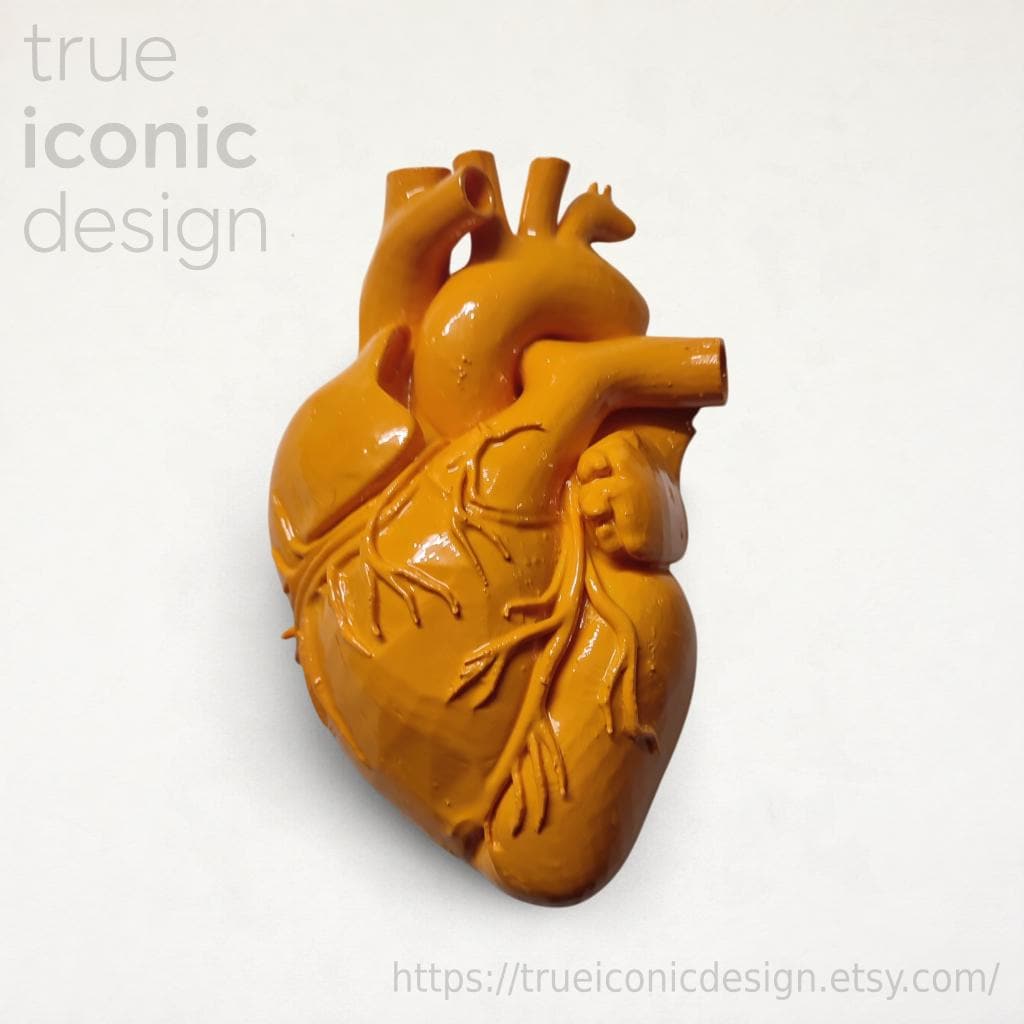
Ochre yellow is the color of ripe wheat, of warm earth, of the sun that warms the stones. Bringing this shade into the domestic space means letting light inhabit the walls. When the chosen shape is that of an anatomical heart, the object ceases to be simple decoration and becomes presence.
A human heart reproduced in its real anatomy, painted in vibrant yellow, tells a story of creativity and optimism. It is not just art: it is a gesture of life made matter.
The Symbol That Radiates Energy
The yellow anatomical heart transforms an internal organ into a symbol of emotional warmth and vital force, breaking every traditional color scheme.
The choice of ochre yellow is not random. This color belongs to the earth, to the harvest seasons, to the light that filters through autumn leaves. Applied to a precise anatomical form, it creates an unexpected encounter: what should be hidden becomes manifest, what is biological becomes solar.
The human heart has always been a metaphor for passion and courage. Making it visible, three-dimensional, and luminous means declaring that inner energy deserves to be openly celebrated.
- Ochre yellow stops the gaze without assaulting the sight
- The anatomical form unites truth of form and pure emotion
- Three-dimensionality creates dialogue with natural and artificial light
Focal Point: Where and How to Place It
An object so full of meaning needs visual space and studied lighting to express all its strength.
The ideal placement is on neutral walls or with strong contrast. A midnight blue wall enhances the warmth of yellow. A white wall makes it vibrate with its own light. The most common mistake is to crowd the surrounding space: this heart needs to breathe.
Lighting makes the difference. A grazing light, perhaps from directional spotlights, enhances the sculptural volumes and shadows of the upper blood vessels. The glossy finish interacts with ambient light creating reflections that change during the day.
Ideal environments include the creative studio, where it stimulates concentration, or the home entrance, where it welcomes with positive energy. It also works in the bedroom, if you are looking for a wake-up full of vitality.
Material and Colour Combinations
The dialogue between warm and cold materials, between smooth and rough surfaces, amplifies the emotional impact of the object.
Natural wood creates a warm and material contrast. A dark oak console under the ochre yellow anatomical sculpture creates a balance between organic and geometric.
Brushed metal introduces a contemporary tension: the coldness of steel against the warmth of yellow. This combination works in industrial chic spaces, where it softens the metallic rigor without distorting it.
| Palette | Atmosphere | Ideal setting |
|---|---|---|
| Ochre yellow + terracotta + sand | Warm, enveloping | Living room, kitchen |
| Ochre yellow + black + anthracite gray | Dramatic, contemporary | Study, office |
| Ochre yellow + midnight blue + gold | Regal, deep | Bedroom, entrance |
Raw concrete offers an urban and material contrast. Linen and raw cotton fabrics bring welcoming softness, balancing the hardness of the anatomical form.
The Sculpture in Detail
Made of plastic with 3D printing and artisanal finishing, this sculpture measures 22 cm in height, 15 cm in width, and 6 cm in depth.
The anatomical wall heart in ochre yellow maintains anatomical fidelity in details: ventricles, atria, and great vessels are recognizable and protruding. The smooth surface shows slight irregularities that tell the additive process of printing, then coated with intense coloring.
The upper vessels – aorta and pulmonary artery – maintain real anatomy, creating visual depth. The glossy finish captures light, generating bright spots that enhance three-dimensionality.
This object belongs to the category of contemporary anatomical art. It suits bedroom, kitchen, living room, creative space, and office. The price is 60 euros.
Errors to Avoid
Even the most powerful object can lose effectiveness if poorly positioned or lit.
Cold or blue lighting dims the ochre tone, canceling the solar effect. Always prefer warm or neutral lights.
Avoid inserting this three-dimensional sculpture in overly classic or baroque environments: stylistic dissonance becomes visual noise. Better the minimalist contemporary, where it works as a calibrated chromatic exception.
Do not pair with too soft pastel colors: ochre yellow needs strong contrasts or earthy tones that respect its nature. And above all, do not crowd the wall: this heart deserves to be a solitary protagonist.
When the Object Becomes a Wish
The gift of a yellow anatomical heart is not a casual gesture. It is a wish for vitality, an invitation to keep passion alive, a reminder that inner energy deserves to be seen and celebrated.
In a domestic space, it becomes a conversation piece. Guests and residents stop, observe, question. The anatomical form attracts for scientific precision, the color holds for emotional warmth.
It is a sculpture that breathes with daylight, that changes mood with the seasons, that reminds every morning that the heart – the real one, the one that beats – is an inexhaustible source of solar energy.
Q&A
What is the symbolic meaning of the yellow anatomical heart?
It represents the transformation of an internal organ into a symbol of emotional warmth and vital force. It unites the truth of biological form with the pure emotion of optimism.
Where is it advisable to place this sculpture?
Ideal settings include a creative studio to stimulate concentration or an entryway to welcome with positive energy. It also works well in a bedroom for a vital awakening.
Which wall colors best enhance the yellow heart?
The ideal placement is on neutral walls like white, which make it vibrate with its own light, or against strong contrasts like midnight blue that accentuate its warmth.
How does lighting affect the perception of the object?
Grazing light from adjustable spotlights enhances sculptural volumes and the shadows of blood vessels. The glossy finish creates dynamic reflections that change throughout the day.
Which materials pair best with this decoration?
Natural wood creates a warm, textured contrast, while brushed metal introduces an element of contemporary coolness. These dialogues amplify the emotional impact.