
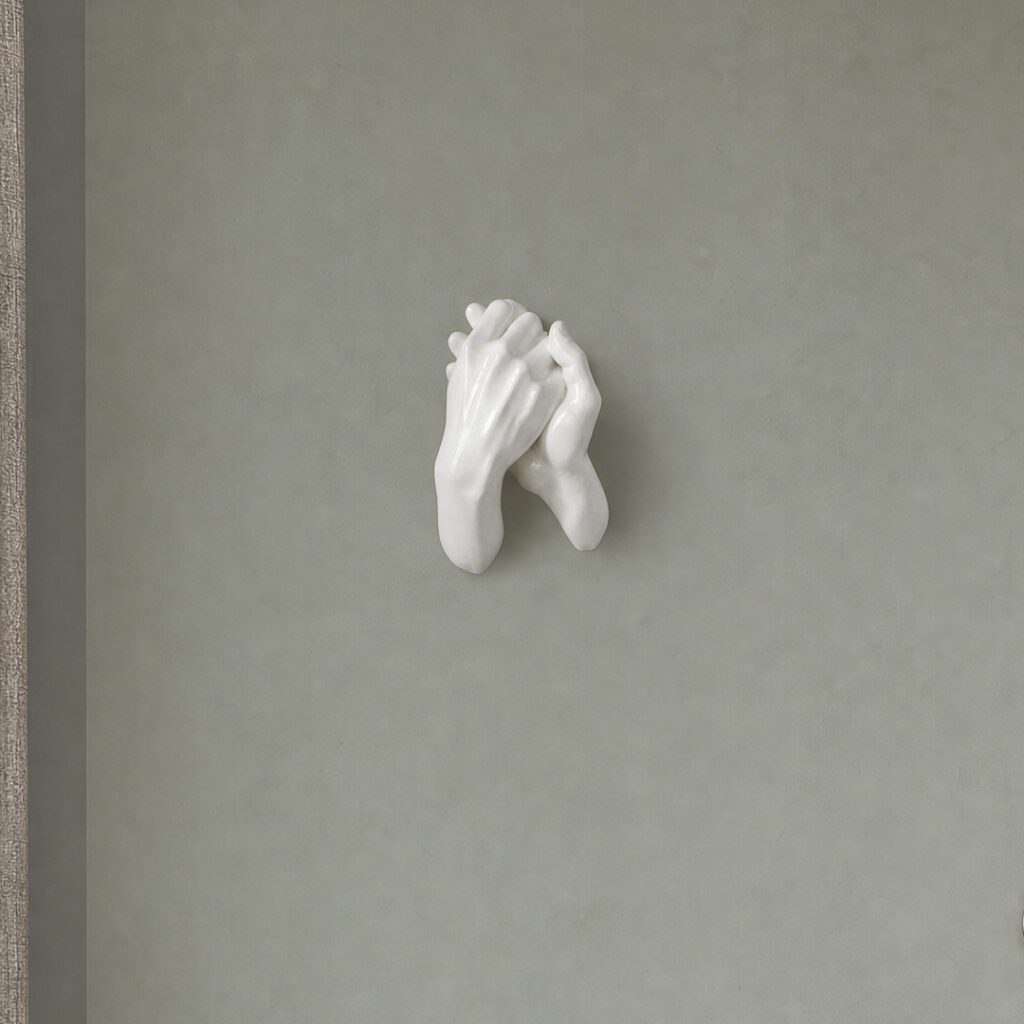
Wall Sculpture as a Symbol of Love: When the Gesture Becomes Decor
There is a moment, in the life of every home, when the walls ask to tell something deeper than a simple color or a random frame. They ask to bear witness to what truly matters: bonds, silent promises, love that needs no declarations because it lives in the everyday gesture.
Clasped hands are the universal language of affection. No words are needed when two palms seek each other, find each other, intertwine. It is protection and vulnerability together. It is saying “I am here” without uttering a syllable.
The Oldest Symbol Becomes Contemporary
Bringing the gesture of union into the domestic space means transforming an ephemeral emotion into a permanent presence, a visual anchor to affection.
Minimalism is not absence. It is choice. It is deciding what deserves to occupy space, air, gaze. A sculpture depicting joined hands does not decorate: it declares. It tells the inhabitants and guests what the spirit of that place is, what promise runs through it.
In an era when homes fill with objects without history, choosing such a clear-cut symbol is an act of emotional courage. It does not hide behind neutral aesthetics, it does not camouflage itself. It stands there, three-dimensional and present, and asks to be looked at.
- Universality: the gesture crosses cultures, generations, lifestyles
- Formal simplicity: organic lines that dialogue with any environment
- Emotional depth: it evokes protection, support, sharing without captions
- Visual strength: three-dimensionality creates shadows and stage presence
Contrasts That Tell a Story
Glossy white against a colored wall, plastic material against natural wood, organic form against geometric architecture: contrasts do not divide, they unite through dialogue.
A white sculpture is never just white. It is reflected light, cast shadow, volume that emerges. The glossy finish captures the morning rays and returns them multiplied. The knuckles shine, the fingers create chiaroscuro effects that change with the hours of the day.
The most powerful contrast, however, is the conceptual one: the apparent coldness of plastic that tells of the warmth of human contact. 3D printing technology at the service of the oldest emotion. Industrial precision that celebrates the imperfection of the spontaneous gesture.
Placing this sculpture next to natural materials amplifies the message. A piece of bleached wood furniture beneath the joined hands creates a dialogue between nature and artifice. Soft fabrics – linen, velvet, cotton – evoke the tactility of skin, the enveloping quality of contact.
Palettes That Amplify the Message
White does not ask for company, but when it finds it, it knows how to turn a wall into a statement of intent.
Neutral monochrome enhances the form. White on white, pearl gray, deep black: these are choices that make the sculpture the sole protagonist. The eye is not distracted; it goes straight to the gesture, to the hands, to the meaning.
But white also pairs beautifully with earth tones. A terracotta or dove-grey wall creates a warm backdrop that anchors the symbol to a more earthly, more domestic dimension. Soft ochre recalls clay, the primordial material, and transforms the sculpture of intertwined hands into an almost archaeological element, as if that gesture had always existed.
| Palette | Emotional effect | Ideal environment |
|---|---|---|
| Neutral monochrome | Essential, contemplative | Minimalist bedroom |
| Earth tones | Warm, enveloping | Family living room |
| Burgundy accents | Passionate, deep | Intimate conversation area |
| Sage green and gray | Zen, reflective | Study or meditation space |
For those seeking a touch of restrained passion, an accent of burgundy or mauve nearby – a cushion, a blanket, a vase – adds depth without shouting. It is the chromatic equivalent of a whispered promise.
True Love: 24 Centimeters of Emotional Presence
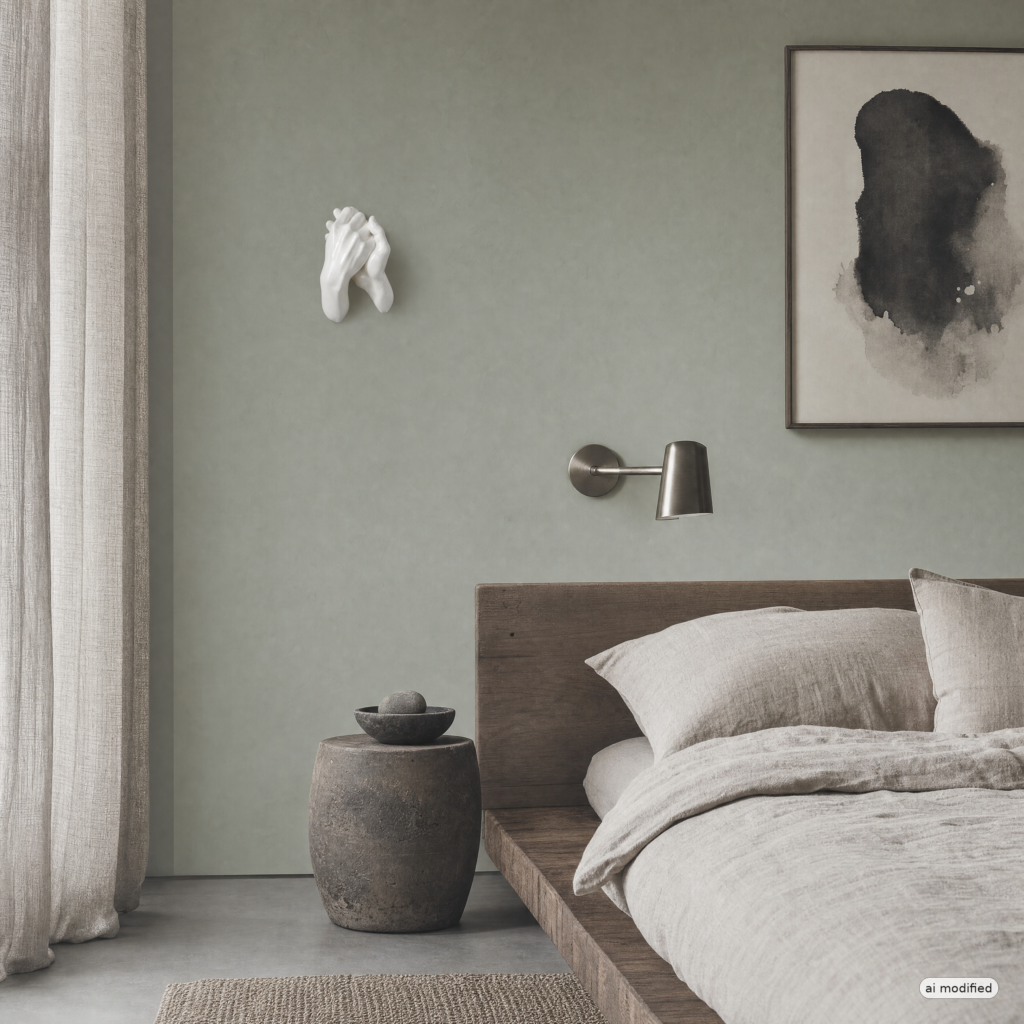
Compact dimensions, monumental impact: when the shape is right, you don't need square meters to occupy the heart.
The True Love sculpture measures 24 centimeters in height and 15 in width, with a depth of 6 centimeters that sets it clearly apart from the wall. It is not a flat painting: it is volume, it is matter that advances into space, it is shadow that draws a second level of narrative on the wall.
Made of plastic through 3D printing, the glossy white finish turns light into an accomplice. The reflections on the knuckles, on the intertwined fingers, on the wrists cut off at the base create an almost sculptural effect, as if the work had been modeled by hand and then enameled.
The versatility is surprising. This three-dimensional sculpture finds a place in the bedroom, above the headboard or on a side wall, as a silent promise that accompanies rest. In the living room it becomes the focal point of a larger composition, perhaps at the center of a gallery of family photographs. In the kitchen or dining room it reminds us that sharing food is sharing life.
The office or creative space can also welcome it: it is a reminder of collaboration, of mutual support, of projects born from a unity of purpose.
How to enhance the sculpture with light
- Avoid frontal light: it flattens the volumes and cancels the shadows that bring the form to life.
- Choose a side light source: a wall lamp (bracket light) or an adjustable spotlight creates dynamic chiaroscuro effects.
- Prefer warm tones: warm light (2700-3000K) enhances the white without making it clinical and adds intimacy.
Placing the Symbol: Where Hands Speak Loudest
Not all spaces carry the same emotional weight. Choosing where to place a symbol of love means recognizing which areas of the home deserve that silent blessing.
The entrance is the first embrace the home offers. Placing the joined hands here means declaring: “This is a place of welcome, of care, of presence.” Anyone who enters immediately knows they are welcome.
The bedroom calls for intimacy. The sculpture above the headboard or on a side wall becomes guardian of shared rest, witness to nighttime promises and gentle awakenings. Nothing else is needed: that gesture is enough to fill the space with meaning.
In the living room, especially in the conversation area, joined hands emphasize the importance of dialogue, listening, and sharing. They are a nonverbal invitation to slow down, to look at each other, to hold each other when needed.
Shared spaces too, such as a home office where a couple works together or a creative studio, can welcome this symbol. It becomes a daily reminder that the best work is born from collaboration, mutual support, and trust.
Pairings That Amplify Without Overpowering
The sculpture does not require forced company, but when it finds the right material and color allies, the message multiplies.
Natural or whitewashed wood is the first ally. A console table beneath the sculpture, a light oak shelf, a raw wood frame nearby: these elements evoke the humanity of the gesture, the naturalness of contact.
Soft fabrics – a linen throw on the sofa, velvet cushions, cotton curtains – evoke the tactile feel of skin. They are the perfect sensory complement to a symbol that speaks of touch, of envelopment, of protection.
Brushed or satin-finished metal creates a contemporary dialogue. A burnished brass lamp, a side table with a black steel frame: these are contrasts that work because they play on the tension between warm and cold, organic and geometric.
Matte ceramic or terracotta can also dialogue with the three-dimensional art of joined hands. A handmade vase, an irregular bowl, objects bearing the artisan’s imprint: they are all references to craftsmanship, to the gesture that creates and unites.
When the Gesture Becomes Home
Walls are never just surfaces. They are emotional canvases, spaces where we project who we are and who we want to be. Choosing to hang a symbol of unconditional love is not decorating: it is declaring.
It is saying that this home is a place where we hold hands in difficult moments. Where we support each other without needing to ask. Where love is not a word to utter on special occasions, but a daily gesture, silent, present.
Joined hands never age. They cross styles, fashions, seasons of life. They remain there, white and glossy, reminding us that the most important thing has always been, and always will be, the ability to reach out a hand and find someone ready to clasp it.