
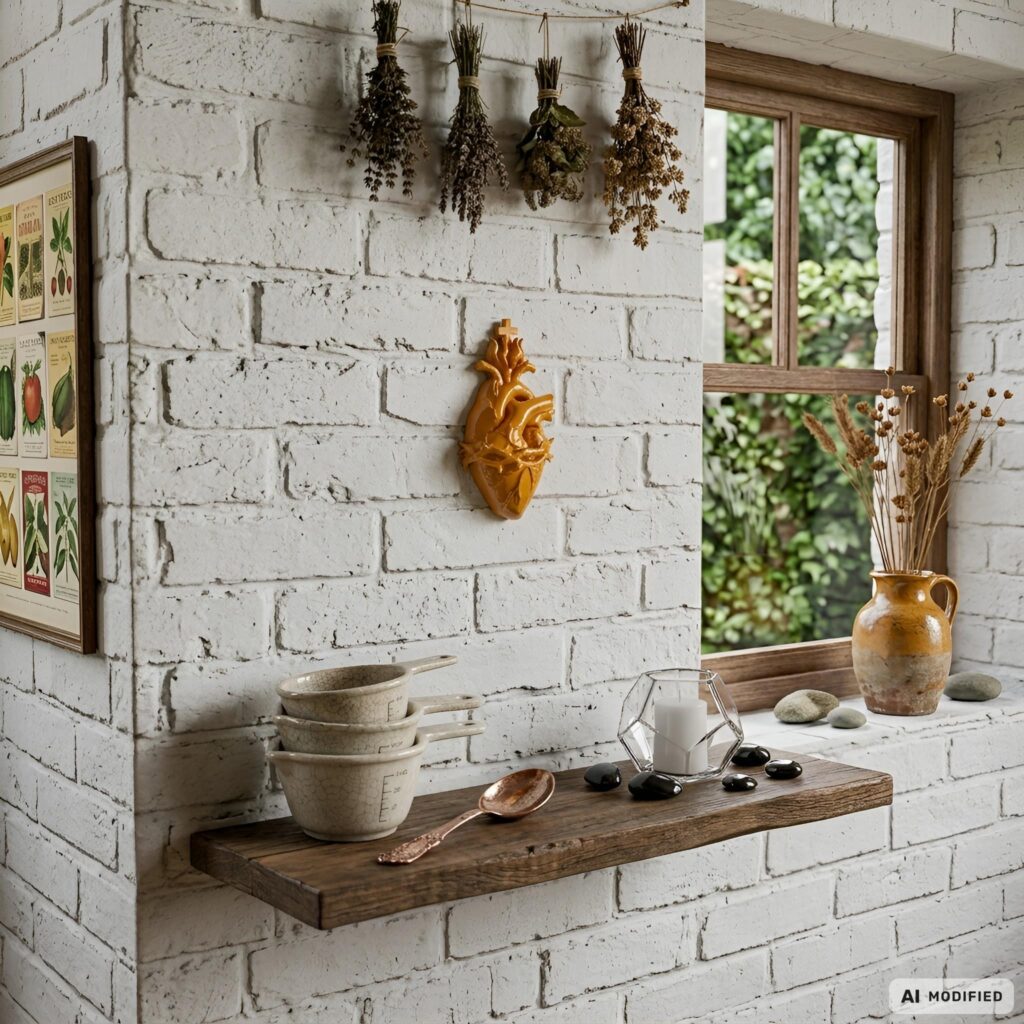
The Yellow That Returns: the Narcissus Sacred Heart as a Domestic Spring Ritual
When the days grow longer and natural light returns to fill the spaces, the home asks to be awakened. There is no need to revolutionize the furnishings: just move an object, change a wall, let color return to converse with the sun. Narcissus yellow is not just a chromatic accent. It is a spring accelerator, a signal that winter is over even inside the home.
The Seasonal Rotation of Symbolic Objects
Moving, repositioning, rediscovering: caring for spaces also involves the conscious rotation of the objects that inhabit the walls.
Not all objects must stay still all year. Some have a seasonal vocation, tied to light, warmth, and the function a room takes on in the warm months. The yellow heart that lived in the dark hallway in winter can migrate toward the living area when the sun begins to enter through the open windows.
This practice is not decoration for its own sake. It is a way to let spaces breathe, to prevent the furnishings from becoming an invisible background. Every change of position reactivates the gaze, forcing one to see again what had become transparent.
How to Organize the Seasonal Rotation
- Late winter: Identify the objects that have lived in poorly lit areas. Assess whether they can migrate to walls that receive more natural light.
- Early spring: Move warm color accents (yellows, oranges, reds) toward the rooms you use most during the day. Let them engage with direct light.
- Check the height: An object hung too high loses impact. The ideal is between 145 and 160 cm from the floor, at standing eye level.
Narcissus Yellow as a Light Accelerator
Yellow does not merely reflect light: it multiplies it, amplifies it, and returns it warmer than it received it.
When a neutral wall meets a saturated yellow object, something precise happens. The glossy monochrome captures the sun's rays and bounces them back into the space, creating a focal point that draws the eye and warms the room's thermal perception.
The Sacred Heart in Narcissus Yellow is designed precisely for this: not to decorate, but to function as a small emotional reflector. Its uniform, glossy finish creates reflections on the curved surfaces, transforming the sculpture into a dynamic element that changes appearance depending on the time of day.
- On walls that receive direct morning light (kitchen, dining area)
- Close to east- or south-east-facing windows
- In rooms that change function with the warmer season (a study that becomes a reading area, a bedroom that opens up to the light)
Height, Proximity, Rotation: the Practical Rules
Three parameters determine whether an object works or disappears: where you hang it, how far it is from the light, how often you move it.
The ideal height for a wall sculpture like this is between 145 and 160 centimeters from the floor. Too high and it becomes ceiling decoration, too low and it gets lost in the visual noise of low furniture.
Proximity to the light source is equally crucial. A yellow object hung on a dark wall doesn't speed anything up: it absorbs the shadow and loses intensity. You need natural light, preferably from the side, that gently grazes the surface without flattening it.
Seasonal rotation should not be rigid. It is enough to move the object once or twice a year, following the change in function of the rooms. In winter the heart can live in the bedroom, a nighttime and intimate guardian. In spring it can migrate to the kitchen or living room, where conviviality becomes daytime and bright again.
| Season | Recommended Position | Effect |
|---|---|---|
| Winter | Bedroom, hallway | Intimacy, nighttime protection |
| Spring | Kitchen, living room, dining area | Energy, warmth, conviviality |
The Yellow Sacred Heart: Sculpture Details
Compact dimensions, bold volume, uncompromising monochrome.
The sculpture measures 15 centimeters in height, 9 in width, and 4 in depth. It is made of PLA, a durable material that allows for uniform painting and a glossy finish. Daffodil yellow is the only featured color, chosen for its ability to stand out on neutral walls without competing with other color accents.
The shape evokes the iconography of the sacred anatomical heart, with stylized flames, a cross at the top, and a crown of thorns modeled in relief. The back is prepared with a hole for wall hanging, designed for immediate and secure installation.
Each piece is handmade in Italy and may show slight variations, a typical characteristic of handmade products. The style is contemporary, suitable for the bedroom, kitchen, living room, creative space, and office.
Pairings for the Warm Season
Light wood, raw linen, matte ceramic: materials that let the yellow breathe without suffocating it.
In spring, daffodil yellow dialogues well with natural materials and soft textures. Raw or bleached wood softens the modernity of 3D printing, creating an organic contrast that warms without weighing it down. Matte ceramic or terracotta evoke the traditional craftsmanship of ex-votos, anchoring the object to popular memory without making it nostalgic.
Linen and natural cotton in upholstery create a tactile contrast that balances the glossy surface of the sculpture. On white, greige, or petrol-blue walls, the yellow wall-mounted heart emerges strongly, without the need for other competing accents.
Avoid placing the heart next to Baroque or overly ornate furniture. The contemporary language of the 3D sculpture would conflict with the antique, diluting the symbolic power of both.
The Ritual of Domestic Awakening
Moving an object is a small gesture. But it can mark the boundary between a house that sleeps and a house that comes back to life.
When you decide to move the yellow heart from the dark area to the bright wall, you are not just moving a painting. You are performing a ritual of awakening, a gesture that says: spring has arrived in here too. There is no need to wait for the solstice or the calendar. A ray of sun entering differently is enough, a window that stays open longer, a room that returns to being lived in during the day.
Daffodil yellow is not a passive color. It is a color that asks for light, that seeks it, that returns it multiplied. Hanging it on a wall that changes function with the warm season means giving it the task it deserves: to accelerate spring, make it visible, transform it into domestic warmth.
Q&A
At what height should the Narcissus Sacred Heart be hung?
The ideal is between 145 and 160 cm from the ground, at standing eye level. An object hung too high loses visual force and does not dialogue with natural light.
On which walls does narcissus yellow work best in spring?
On walls that receive direct light in the morning, such as the kitchen and dining area, or near east- or southeast-facing windows. The glossy finish captures the rays and bounces them back into the space.
Why move decorative objects with the change of season?
Seasonal rotation prevents the decor from becoming an invisible backdrop and reactivates the gaze. Objects with a seasonal vocation migrate toward the brightest areas when the sun begins to come through the windows.
How does narcissus yellow work as a light accelerator?
The glossy monochrome captures the sun's rays and bounces them back into the space, creating a focal point that warms the room's thermal perception. Reflections on the curved surfaces make the sculpture dynamic depending on the time of day.
Where should the yellow heart migrate at the beginning of spring?
From poorly lit areas such as the dark hallway toward the living area, where the sun comes through the open windows. The goal is to make the warm chromatic accent dialogue with direct light.