
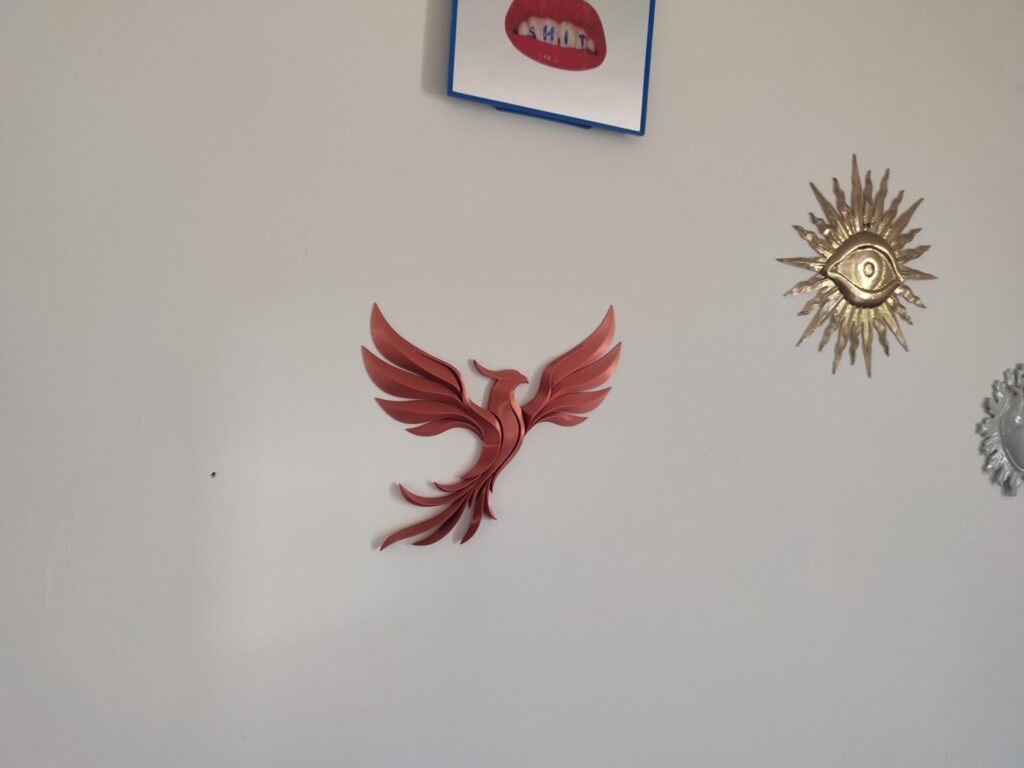
The Phoenix in the Kitchen: silk-finish copper as a slow fire above the set table
The kitchen and dining room are the domestic spaces where warmth is not only temperature: it is atmosphere. Where light does not merely illuminate, but accompanies. And where an object hung on the wall can become the symbolic fire around which the family gathers, day after day.
Placing a wall decoration above the sideboard or behind the table is never a neutral gesture. It is choosing what to look at while sharing a meal, what to welcome into your gaze when you look up between one course and the next. And when that decoration is a phoenix in copper with a silk finish, the gesture takes on an additional meaning: that of daily rebirth, of coming together again, of starting over together.
The warm point above the table
The silk-finish copper decoration works like a slow fire: it does not dominate, but warms. It does not dazzle, but attracts the gaze discreetly.
The satin reflection of the PLA with metallic copper finish captures the natural light coming through the window during lunch and the warm light of pendant lamps in the evening. It does not create glares, but gradations: from burnt copper to almost golden, depending on the angle and time of day.
This effect works best if the decoration is placed on an empty wall, at a distance of at least 150-180 cm from the edge of the table. Too close, it risks being covered by the diners' heads. Too far, it loses the dialogue with the dining space.
- Height: 160-170 cm from the floor, so it stays in the field of view even when seated
- Distance from the table: 150-180 cm for a balanced visual dialogue
- On the back or side wall of the dining area, never behind the backs of those seated
Building the frame: woods, ceramics, linen
Around the copper-silk phoenix, an atmosphere is built up in layers: warm materials, matte surfaces, natural fabrics.
Wood is the first ally. A walnut or natural oak sideboard, a teak table, chairs with solid wood frames: they create a material dialogue with the decoration, amplifying its warmth without competing for attention.
Matte ceramics – raw stoneware plates, hand-glazed bowls, terracotta jugs – dialogue with the silk finish of the copper. Both reject excessive gloss, preferring a diffuse, tactile luminosity.
Fabrics complete the scene. Unbleached linen tablecloths and runners, ivory cotton napkins, taupe velvet chair cushions: they add softness and absorb light, letting it be the copper wall sculpture to shine.
| Element | Recommended material | Chromatic effect |
|---|---|---|
| Sideboard | Natural walnut or oak | Warm organic dialogue |
| Tableware | Rough stoneware, terracotta | Matte finish that enhances copper |
| Fabrics | Linen, cotton, velvet | Tactile and visual softness |
| Wall | Matte dove-grey or ivory paint | Neutral background that makes it stand out |
Color palette: earth tones, sage, ivory
The phoenix’s silk copper sets the color temperature of the entire room. Around her, the colors must accompany, not contrast harshly.
Burnt earths – ochre, terracotta, dove grey – create a monochromatic embrace. They are the tones of freshly baked bread, artisanal ceramics, and aged wood. They envelop without suffocating.
Sage or olive green introduces an elegant contrast. It is not the bright green of tropical plants, but the desaturated green of aromatic herbs, olive leaves, and naturally dyed fabrics. It enhances the shades of copper without stealing the show.
Ivory and cream, lastly, are the colors of reflected light. On walls, they act as a neutral background that amplifies the presence of the decoration. On fabrics, they create visual pauses that rest the eye.
How to build the palette around copper
- Neutral base: Ivory or light dove-gray walls, to make the decoration stand out as the absolute focal point.
- Warm accents: Fabrics and accessories in ochre, terracotta, or burnt earth, to amplify the warmth of the copper.
- Green contrast: A sage ceramic vase, an olive branch, an olive-green cushion, to add depth without overdoing it.
The phoenix as a symbolic presence
Above the set table, the phoenix is not just decoration. It is a promise of rebirth, a silent wish, a household talisman.
The shared meal is a ritual of daily renewal. We sit down tired, we rise nourished. We meet scattered, we leave more united. The phoenix, with its wings spread and its flowing tail drawing an ascending diagonal, embodies this movement: from bottom to top, from ashes to light.
The decoration measures 23 cm wide by 19.5 cm high, with a depth of just 1.5 cm. It is made of PLA, a lightweight and durable bioplastic, through 3D printing made in Italy. The copper silk finish creates a warm, satin metallic effect that shifts from dark copper to almost golden on the curves.
It comes with a drilling template for simple, precise installation. It does not require any special technical skills, just a drill and a few minutes of care.
Mistakes to avoid
Even the most beautiful accessory can lose impact if poorly positioned or lit.
Avoid cool lights or white LEDs above the dining area. They dull the silk finish and extinguish the inherent warmth of the copper. Always prefer warm-light bulbs (2700-3000K), preferably dimmable.
Do not hang the decoration on walls already crowded with paintings, shelves or other objects. The phoenix needs visual breathing room to express its symbolic power. A clear wall, or at most accompanied by one or two understated ceramic pieces, is ideal.
Avoid pairing with excessively lacquered or glossy materials. The cold gloss of industrial lacquers creates a stylistic conflict with the organic materiality of the silk copper. Always prefer matte or satin finishes, natural woods, burnished metals.
Pendant lights with warm light (2700-3000K) positioned above the table, about 70-80 cm from the surface. Indirect light enhances the satin reflection of the copper without creating harsh shadows.
Closing: the fire that never goes out
In the kitchen and dining room, the silk copper wall-mounted phoenix becomes the symbolic fire that never goes out. It does not warm the hands, but the gaze. It does not light the room, but the atmosphere. And every time one sits at the table, it reminds that every meal is a new beginning, every day a possible rebirth.
Q&A
At what height should the silk copper phoenix above the table be hung?
The ideal height is 160-170 cm from the floor, so the decoration stays in the field of view even when seated. It should be placed on a back wall or one to the side of the dining area, never behind the backs of those seated.
How far should the decoration be from the edge of the table?
The recommended distance is 150-180 cm from the edge of the table. Too close and it risks being covered by the diners' heads, too far and it loses the visual dialogue with the dining space.
How does the reflection of the silk copper change during the day?
The satin finish catches the natural light from the lunch window and the warm light of pendant lamps in the evening. It does not create glare but gradations, from burnt copper to almost golden, depending on the angle and the time of day.
Which materials pair best with the silk copper phoenix in the dining area?
Woods such as walnut, natural oak and teak create a warm material dialogue. Add matte ceramics in raw stoneware, terracotta and hand glazes, together with natural fabrics such as unbleached linen and ivory cotton.
Why choose a silk copper phoenix for the dining area?
The phoenix symbolizes rebirth and resilience, turning the wall above the table into a symbolic fire around which to gather. The silk finish of the metallic copper adds discreet warmth without dominating the space.