Anatomia della Gratitudine: Quando il Cuore Sacro Diventa Design Contemporaneo
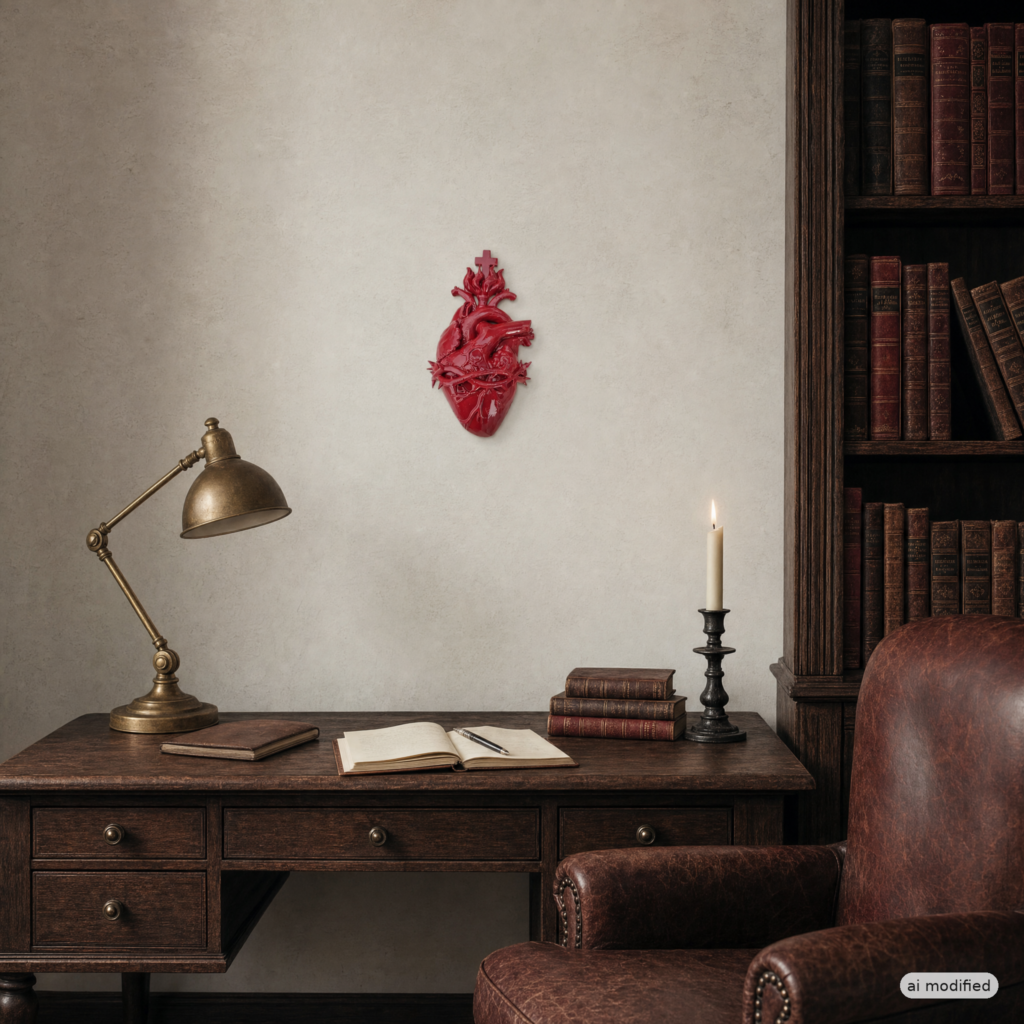
C’è un istante in cui un oggetto smette di essere arredamento e diventa presenza. Accade quando il simbolo incontra lo spazio. Quando la devozione lascia le nicchie delle chiese e trova casa nelle pareti domestiche. Il cuore anatomico rosso, sospeso tra sacro e profano, trasforma una superficie vuota in un luogo di raccoglimento.
Non è nostalgia. È traduzione contemporanea di un linguaggio antico.
L’Ex Voto Rivisitato: Dal Santuario alla Parete Domestica
La tradizione dell’ex voto – l’offerta votiva donata per grazia ricevuta – trova oggi una forma inedita attraverso la precisione della stampa 3D e il linguaggio del design contemporaneo.
Gli ex voto sono sempre stati oggetti di confine. Nascono dalla gratitudine, vivono nell’intimità del gesto, parlano di promesse mantenute. Nelle chiese di campagna, nelle cappelle votive, questi oggetti raccontavano storie personali attraverso simboli universali: il cuore, la mano, l’occhio.
La loro forza risiedeva nell’essere insieme privati e pubblici. Un dialogo tra chi offre e chi osserva, mediato dal simbolo.
Oggi quella stessa grammatica emotiva può abitare spazi laici. Non per secolarizzare il sacro, ma per riconoscere che la gratitudine ha bisogno di forma. Che l’introspezione richiede ancore visive. Che anche una parete bianca può diventare luogo di riflessione.
- L’ex voto tradizionale nasce come offerta tangibile di gratitudine
- Il cuore anatomico unisce precisione scientifica e simbolismo religioso
- La croce sommitale identifica il Sacro Cuore nella tradizione cattolica
- La trasposizione contemporanea mantiene il valore emotivo, liberandolo dal contesto esclusivamente liturgico
Pareti Bianche e Punti Focali: L’Arte di Creare Sospensione
Una superficie vuota non è assenza, ma potenziale. Il punto focale giusto non riempie lo spazio: lo attiva, creando un campo gravitazionale emotivo attorno a sé.
Il minimalismo contemporaneo ha insegnato a sottrarci. Meno oggetti, più respiro. Ma questa sottrazione crea un contrasto: le pareti vuote chiedono significato, non solo colore.
Un punto focale efficace non urla. Attrae lo sguardo, lo trattiene, invita alla sosta. Il rosso cardinale contro il bianco puro crea questo effetto: contrasto netto, impossibile da ignorare, ma non aggressivo. È un richiamo, non un’imposizione.
La forma anatomica del cuore aggiunge profondità narrativa. Non è il cuore stilizzato delle emoji, né quello decorativo delle carte da gioco. È un organo riconoscibile, vulnerabile nella sua precisione. Questa vulnerabilità crea intimità.
Tecnologia al Servizio del Simbolo: La Stampa 3D Come Nuovo Artigianato
Il PLA stampato in 3D e verniciato a mano rappresenta l’incontro tra precisione digitale e finitura artigianale, dove la tecnologia non sostituisce il gesto umano ma lo amplifica.
La stampa 3D ha reso la scultura accessibile. Ciò che un tempo richiedeva mesi di lavoro in legno o metallo, oggi nasce da un processo additivo, strato dopo strato. Ma il risultato finale dipende ancora dalla mano che vernicia, dalla scelta della tonalità, dalla cura della finitura.
The cuore sacro ex voto da parete è realizzato in PLA, un materiale derivato da risorse rinnovabili. La sua superficie viene trattata con verniciatura uniforme che protegge e intensifica il rosso profondo. Non è materiale comune: è scultura contemporanea accessibile.
Questa accessibilità non è compromesso. È apertura del simbolo. L’ex voto tradizionale era spesso commissionato da chi poteva permetterselo. Oggi la tecnologia permette di mantenere la dignità estetica abbassando la barriera economica.
Come Integrare un Punto Focale Simbolico
- Ident
Q&A
What is the meaning of the reinterpreted ex-voto in a contemporary key?
The reinterpreted ex-voto retains its emotional grammar of gratitude and promise but shifts from a liturgical to a secular domestic context. It does not aim to secularize the sacred, but rather to give visible form to introspection and thankfulness within the home.
Why is an anatomical heart chosen instead of a stylized one?
The anatomical heart offers scientific precision that makes it recognizable and vulnerable, creating greater intimacy than conventional decorative symbols. This realistic representation transforms the object from simple decor into a powerful narrative focal point.
How does the red heart interact with minimalist spaces?
In a minimalist environment with white walls, the cardinal red of the heart creates a sharp contrast that activates the space without overpowering it. The object serves as a visual anchor inviting pause and reflection, filling the void with meaning rather than objects.
What materials and techniques are used to create this design?
The object is made using 3D printing with PLA filament, ensuring digital precision in the anatomical form. Finishing is done by hand-painting, thus combining modern technology with the sensitivity of traditional craftsmanship.
Which elements traditionally identify the symbol of the Sacred Heart?
In Catholic tradition, the Sacred Heart is identified by the shape of a red anatomical heart surmounted by a cross. This contemporary design maintains these symbolic elements to preserve the link with tradition while placing them within a new aesthetic language.