
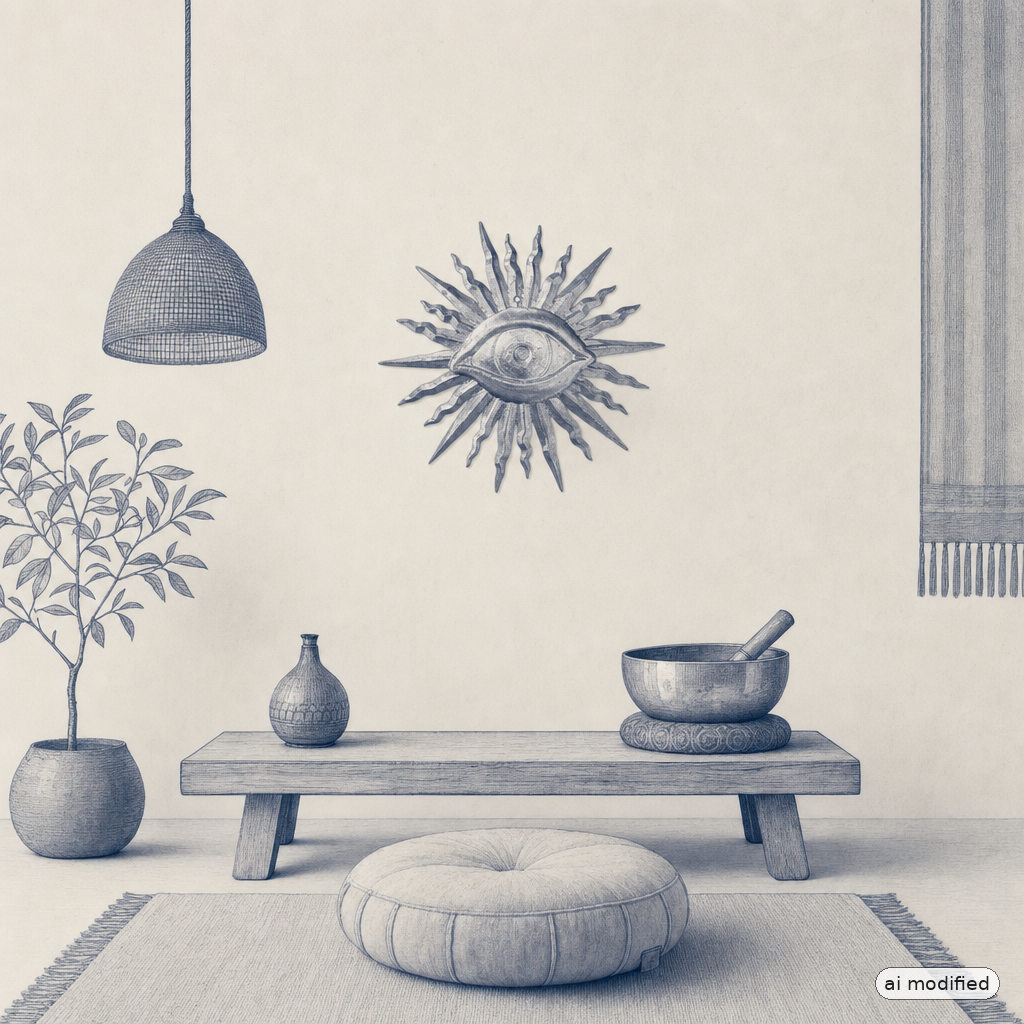
Il Guardiano Silenzioso: Quando l’Argento Diventa Luce Lunare nelle Mura Domestiche
C’è un istante, nel tardo pomeriggio, in cui la luce smette di essere sole e diventa chiarore. È un momento sospeso, freddo, dove gli oggetti perdono la loro funzione pratica per acquisire presenza. Un occhio argentato appeso alla parete non chiede attenzione: osserva, riflette, custodisce il silenzio della stanza.
L’argento, nelle mura domestiche, non è mai neutro. Porta con sé la memoria della luna, di una chiarezza mentale che emerge quando il rumore del giorno si spegne. Quando un simbolo arcaico come l’occhio solare incontra questa finitura, diventa intimo: un talismano che non protegge dall’esterno, ma invita a guardare dentro.
Il Colore della Percezione Silenziosa
L’argento non è una tinta passiva: è una superficie che respira, amplifica e trasforma la luce ambientale in materia tangibile.
A differenza dell’oro che scalda e afferma, l’argento raffredda e interroga. Nelle tradizioni simboliche è il metallo della luna, di una saggezza che non si impone ma si rivela. Una superficie argentata in casa cattura ogni variazione luminosa: il grigio del mattino, il bagliore tremulo di una candela, il riflesso distante di uno schermo spento.
Questa capacità di dialogo con la luce rende l’argento ideale per spazi dove si cerca concentrazione o riposo. Non compete con l’ambiente, lo completa. Non domina lo sguardo, lo accompagna.
Anatomia di un Punto Focale Mistico
Un simbolo diventa punto focale quando la sua forma e il suo posizionamento creano un’ancora visiva che organizza lo spazio intorno a sé.
L’occhio circondato da raggi solari è una geometria perfetta: simmetria radiale, alternanza di linee e curve, un centro magnetico. Quando questa forma viene realizzata in rilievo, la parete smette di essere un fondo piatto e acquista profondità.
La texture superficiale, con le sue striature orizzontali tipiche della stampa 3D, aggiunge un elemento tattile inaspettato. Non è la perfezione liscia del metallo fuso, ma una trama che ricorda incisioni antiche, un segno del processo creativo. Questa imperfezione controllata crea giochi di ombra che cambiano con l’angolo della luce, dando vita all’oggetto.
- Simmetria radiale che attira naturalmente lo sguardo al centro
- Contrasto tra la finitura metallica e la texture materica
- Ombra proiettata sulla parete che amplifica la percezione di volume
- Dimensioni contenute (23 × 23 cm) che permettono intimità senza invadere
L’Arte di Posizionare un Amuleto Contemporaneo
La collocazione di un simbolo protettivo non segue solo logiche estetiche, ma risponde a una geografia emotiva dello spazio domestico.
Un talismano solare da parete funziona meglio dove la luce può dialogare con la sua superficie. Sopra un comodino, all’altezza esatta dello sguardo da sdraiati, diventa l’ultima immagine prima del sonno e la prima al risveglio. In un ingresso, sospeso tra l’esterno e l’interno, segna il confine tra il mondo pubblico e quello privato.
Le zone di transizione sono il suo habitat naturale. Un corridoio che collega la zona giorno alla zona notte, l’angolo tra cucina e soggiorno, la parete di fronte alla porta del bagno. Luoghi dove si passa senza sostare, ma dove uno sguardo può cambiare la qualità dell’attraversamento.
Negli spazi creativi o meditativi, l’occhio argentato diventa un’ancora simbolica. Non serve a decorare, ma a ricordare l’intenzione: concentrazione, ascolto interiore, silenzio mentale. La sua presenza fredda e cristallina contrasta con il calore umano dell’attività, creando un equilibrio necessario.
Luce Fredda per un Simbolo di Valore
La scelta dell’illuminazione non è un dettaglio tecnico, ma il fattore che determina se un oggetto argentato vive o si spegne.
L’argento necessita di luce per esistere pienamente. Una lampadina a luce calda (2700-3000K) ne appesantisce l’essenza, trasformando il freddo lunare in un giallo opaco. La temperatura di colore ideale si colloca tra 4000 e 5500K: luce neutra o fredda che esalta i riflessi metallici senza alterarne la natura.
Un faretto direzionabile crea un effetto drammatico, con ombre nette che accentuano il rilievo dei raggi solari. Una luce diffusa, invece, genera un bagliore uniforme che fa sembrare l’oggetto quasi luminoso di luce propria. Entrambe le soluzioni sono valide, purché la fonte luminosa rispetti la freddezza cromatica.
Come illuminare un simbolo argentato
- Identificare la fonte luminosa principale: Finestra, lampada da terra, faretto a soffitto.
- Verificare la temperatura di colore: Deve essere neutra o fredda, mai calda.
- Testare l’angolo di incidenza: La luce laterale crea più ombre e profondità rispetto a quella frontale.
- Osservare nei diversi momenti della giornata: L’effetto cambia con la luce naturale.
Palette e Materiali: Il Dialogo tra Freddo e Caldo
L’abbinamento cromatico e materico non è una questione di gusto, ma di coerenza simbolica ed emotiva.
L’argento dialoga naturalmente con grigi freddi, bianchi ghiaccio, blu notte. Questa palette monocromatica crea un’atmosfera sospesa, quasi onirica, perfetta per camere da letto o angoli meditativi. Aggiungere un tocco di nero profondo fa risaltare l’argento come unica fonte di luce visiva, aumentandone la presenza simbolica.
Per chi cerca un equilibrio più morbido, verde salvia e grigio tortora introducono calore senza tradire la freddezza lunare. Sono colori che rilassano senza addormentare, che accolgono senza soffocare.
Sul fronte materico, il contrasto è la chiave. Legno scuro come noce o ebano crea una tensione visiva potente: il naturale contro il tecnologico, il caldo contro il freddo. Metallo spazzolato in acciaio o alluminio, invece, genera continuità, un dialogo tra superfici riflettenti che moltiplicano la luce.
| Pairing | Emotional effect | Ideal environment |
|---|---|---|
| Argento + legno scuro | Contrasto drammatico, energia contenuta | Contemporary living room |
| Argento + bianco ghiaccio | Purezza, silenzio, sospensione | Camera da letto, bagno spa |
| Argento + blu notte | Profondità, mistero, introspezione | Spazio meditazione, studio |
| Argento + metallo spazzolato | Continuità materica, rigore industriale | Cucina, open space minimal |
Quando il Simbolo Diventa Complemento d’Arredo
La trasformazione di un amuleto in oggetto di design non ne cancella il significato, ma lo rende accessibile a chi cerca bellezza e senso insieme.
Un occhio solare argentato realizzato in ABS con stampa 3D rappresenta questa doppia natura. La tecnologia additiva è contemporanea, quasi futuristica. Il simbolo dell’occhio onniveggente attraversa millenni di culture. Il risultato è un oggetto che non appartiene né al passato né al futuro, ma a uno spazio intermedio dove convivono.
Lo spessore contenuto di 1 cm permette di appenderlo con un semplice chiodo, senza bisogno di sistemi di fissaggio complessi. Le dimensioni quadrate di 23 × 23 cm lo rendono abbastanza presente da creare un punto focale, ma abbastanza discreto da non sovrastare altri elementi. È un equilibrio raro, che funziona sia in solitudine che in composizione con altri simboli.
La finitura argentata trasforma la plastica in qualcosa che sembra metallo. Non è un inganno, ma una scelta estetica coerente: il materiale contemporaneo si veste del colore arcaico della luna, creando un ponte tra epoche e linguaggi.
Errori da Evitare: Quando il Simbolo Perde Forza
Un amuleto mal posizionato o mal abbinato non è solo un errore estetico, ma una dissonanza emotiva che inquina lo spazio.
Il primo errore è il sovraffollamento. Troppi simboli sulla stessa parete si annullano a vicenda, creando rumore visivo invece di significato. Un occhio argentato ha bisogno di respiro, di una superficie che lo isoli e lo esalti.
Il secondo è l’abbinamento con colori caldi e saturi. Rosso, arancione, giallo oro spezzano la freddezza lunare, creando un contrasto non drammatico ma semplicemente stonato. L’argento perde la sua identità, diventa un elemento qualsiasi.
Il terzo errore è ignorare la luce. Un amuleto di luce lunare in una stanza con illuminazione esclusivamente calda è come un pesce fuor d’acqua. Non muore, ma non vive pienamente.
Il Guardiano che Non Dorme
C’è una qualità particolare negli oggetti che osservano senza giudicare. L’occhio sulla parete non chiede nulla, non pretende attenzione costante. Semplicemente resta, riflettendo la luce che cambia, segnando il passaggio delle ore con il movimento delle ombre.
In una casa dove tutto è funzionale e tutto è spiegabile, un talismano argentato introduce una dimensione diversa. Non serve a nulla di pratico, eppure serve a qualcosa di essenziale: ricordare che esistono spazi interiori da custodire, intuizioni da ascoltare, silenzi da proteggere.
L’argento continua a brillare anche quando nessuno guarda. E forse è proprio questo il suo dono più prezioso: la costanza di una presenza che non si impone, ma che c’è sempre, fedele come la luna che torna ogni notte a illuminare il buio.